top of page


click on these buttons to explore other themes


Do you care about the environment where you live?
Would you like future generations to inhabit a balanced ecosystem?
Would you be willing to contribute to sustaining environmental health?
Do you consider yourself someone who is willing to adjust their beliefs and behavior when introduced to data-based and well-researched information about the environmental impact of humans?


You have probably watched many documentaries about different types of animals…
And most certainly, while watching, you felt connected to their lives and stories.
Surely, you were astonished by the richness of life on our planet.

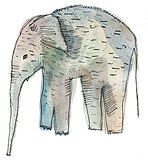
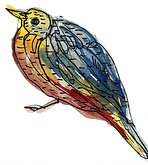


ANONYMOUS STREET ART, BERLIN, GERMANY

Given the number of animals raised as livestock, very few of them are roaming free...
MOST OF THE MEAT THAT WE SEE ON THE SHELVES OF SUPERMARKETS COMES FROM ANIMALS RAISED IN FACTORY FARMS.

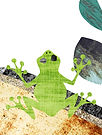


ANONYMOUS STREET ART, BERLIN, GERMANY
SENTIENCE INSTITUTE estimateS that over 90% of farmed animals globally are living in factory farms at present.

IMAGE BORROWED FROM THE SAVE MOVEMENT

ANONYMOUS STREET ART, BERLIn, GERMANY
What about the Earth’s surface that holds the richness of life?
How are we using the land?

This means that almost half (45%)of the habitable land (out of 76% of total land surface), is taken by agriculture (marked in green in the chart below)
Out of those 45%, 80% (marked in pink)— is given to animal agriculture = animals, animal feed, and connected businesses.

And (Pay Attention now)....
ANIMAL AGRICULTURE (WHILE TAKING SO MUCH SPACE AND RESOURCES) GIVES US ONLY (!!!) ~17 % CALORIES (GlobAL SUPPLY MARKED IN PINK)


AT THE SAME TIME, ANIMAL AGRICULTURE IS A MAJOR DRIVER OF DEFORESTATION IN THE WORLD.


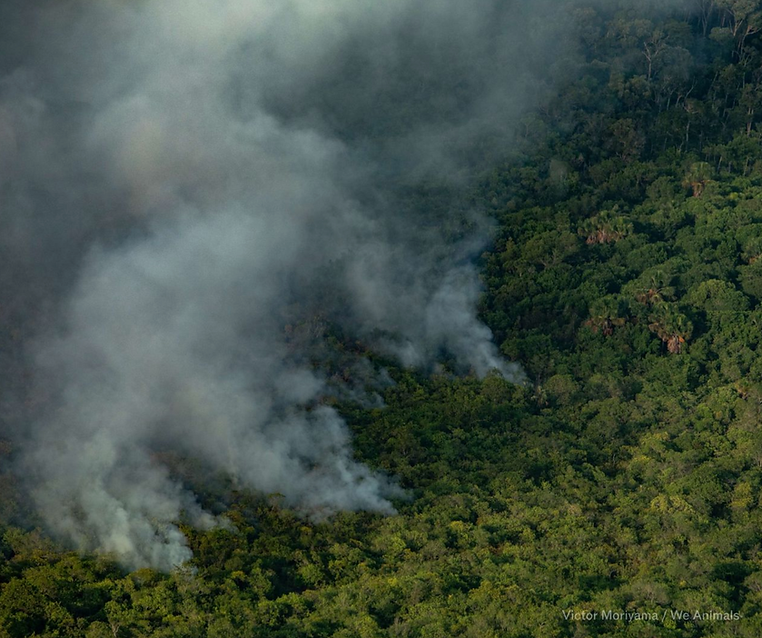
IMAGE: Aerial View of a burning forest area next to a cattle ranch. Undisclosed location, Mato Grosso, Brazil, 2019. Victor Moriyama (@victormoriyama) / We Animals


ENVIRONMENTAL JUSTICE STICKER, BERLIN, GERMANY


Aiden Castillo
Fordham University (NY, US)
Fall 2025

Deforestation of the Brazilian Amazon presents one of the greatest challenges to global conservation goals. More than 780 thousand square kilometers of forest has been lost in the last 30 years, causing nearly half of Brazil’s carbon emissions and the loss of 2,000 species (de Castro Solar et al., 2015, INPE, 2020, SEEG, 2018). Pasture expansion for cattle production is the main driver of deforestation and has been linked to 80% of clearing (Global Forest Atlas, 2016).
Marin Elisabeth Skidmore, Fanny Moffette, Lisa Rausch, Matthew Christie, Jacob Munger, Holly K. Gibbs,
Cattle ranchers and deforestation in the Brazilian Amazon: Production, location, and policies,Global Environmental Change,Volume 68,2021,
102280,ISSN 0959-3780,
https://doi.org/10.1016/j.gloenvcha.2021.102280.
(https://www.sciencedirect.com/science/article/pii/S0959378021000595)
MEAT ATLAS 2021 15
A big portion of the meat that enters the
international trade – either as living animals
or after slaughter – comes from Brazil

CLICK ON THE IMAGE

JBS Website
This means that we are cutting forests to sustain animal agriculture that currently inefficiently feeds the world. We are importing animal products from large corporations like JBS and depleting the natural resources of the planet on a global scale. This brings devastation to local ecosystems and causes harm to marginalized local communities.
And all of the above gives us a global supply of ONLY ~17% of calories.
We are in A
lose-lose-lose situation.


ANONYMOUS STREET ART, BERLIN, GERMANY


CLIMATE-FOCUSED GAME, BERLIN, GERMANY


OKAY, IT IS CLEAR BY NOW THAT
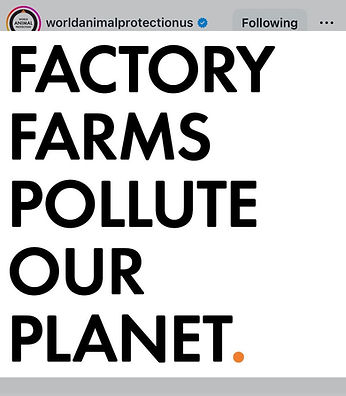
Animal agriculture, in its industrial form, degrades soil through overuse and monoculture feed production, strips forests to create grazing land, and contaminates water systems with waste and runoff. It pollutes the air with methane and ammonia emissions, intensifying climate instability. It also consumes vast quantities of freshwater while yielding relatively few calories in return, especially when considering the land and resources required for feed and livestock production. At the same time, it drives biodiversity loss by displacing habitats and contributes to human health risks through pollution and dietary impacts. If Earth calls for anything, it is not only appreciation-but responsibility: to reconsider the systems we sustain, and to move toward ways of living that regenerate rather than deplete the fragile, interconnected web we depend on.

Erasure Poetry, Lena Pozdnyakova
2026





ON A SYSTEMIC LEVEL, JOIN AND SUPPORT INITIATIVES LIKE THESE.


PLUS, ORGANIZE PLANT-BASED CATERING FOR PUBLIC GATHERINGS, SHARED MEALS, AND CORPORATE AND INSTITUTIONAL EVENTS.


Erasure Poetry, Lena Pozdnyakova
Spring 2026


click on these buttons to explore other themes
bottom of page